Sunken stoops, tilted driveways, and sinking garage floors are a Concord winter problem. We lift them back to level, fix the drainage causing it, and do not charge you for work you do not need.
Foundation raising in Concord, NH lifts a sunken concrete slab back to its original level position by pumping material through small drilled holes into the void beneath it, with most residential jobs - a driveway section, front stoop, or garage floor - completed in two to four hours and walkable the same day.
Concrete does not sink on its own - the soil underneath shifts first. In Concord, that usually comes down to freeze-thaw cycles: the ground freezes and expands dozens of times each winter, loosening the soil under slabs until a gap forms and gravity does the rest. Many homes in the South End, East Concord, and Penacook were built on minimally prepared soil, which makes settling more common in those neighborhoods. If you have noticed your front walkway tilting toward the house, that slope also sends snowmelt directly at your foundation - which is worth addressing sooner rather than later. When a slab is too deteriorated to raise, our concrete cutting service can remove the damaged section cleanly so new concrete can be poured.
Spring is the busiest season for this work in Concord - snow melts and homeowners see the damage winter left behind. The best contractor slots fill up fast between March and May. If you are looking at a tilted or sunken slab right now, calling sooner rather than later is genuinely in your interest, not just a sales line.
If you step outside in spring and notice your front steps or walkway look more uneven than they did last fall, freeze-thaw movement is the likely cause. In Concord's climate, this kind of seasonal shift is common and tends to get worse each year. A slab that tilts toward your house also directs water toward your foundation, creating a second problem.
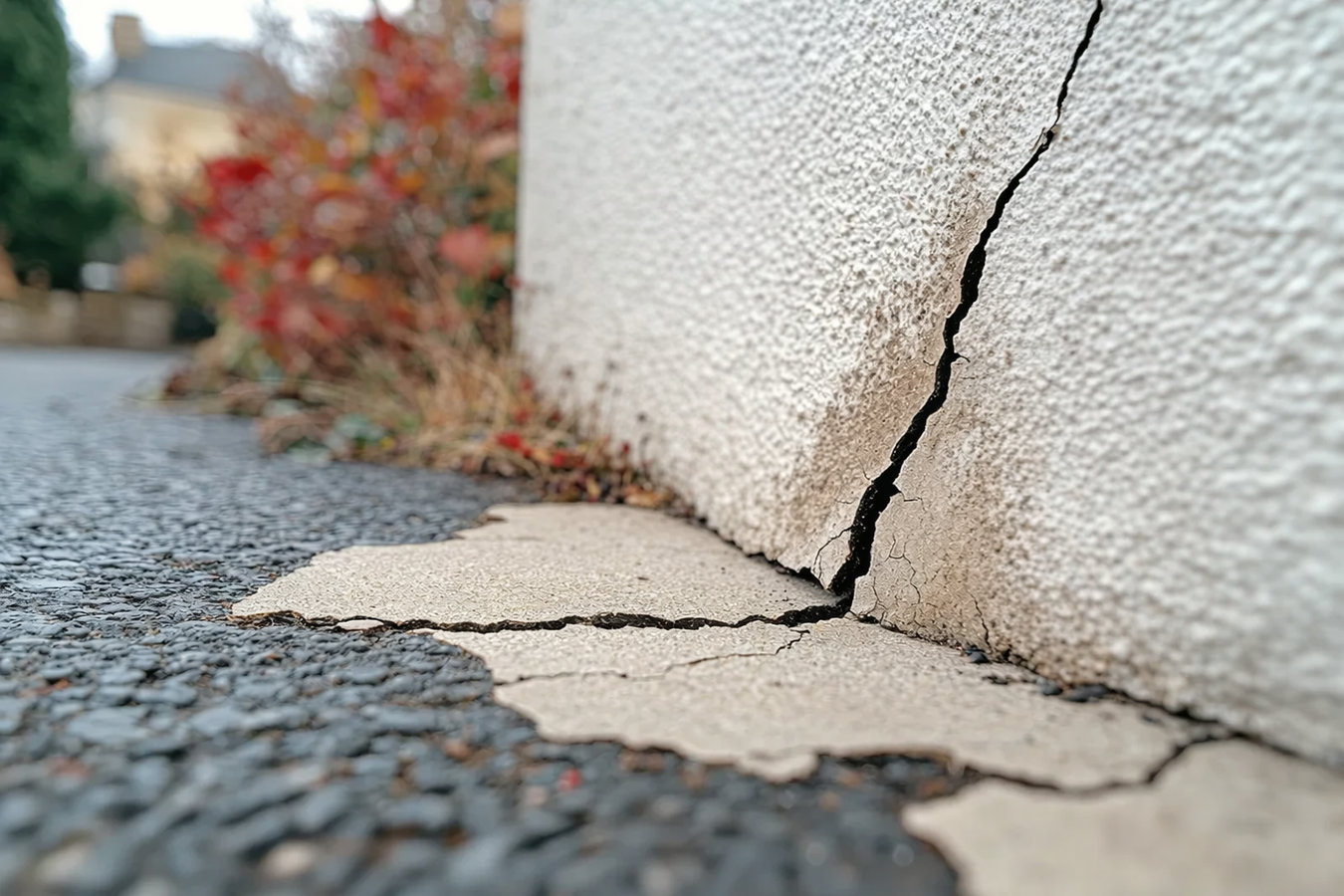
A gap that has opened between a concrete slab and the structure it meets - your front steps pulling away from the house, or your garage floor separating from the wall - is a clear sign the slab has dropped. This kind of gap does not close on its own, and it tends to widen over time as soil continues to shift.
When a slab settles unevenly, it creates low spots where rainwater collects. If you are noticing puddles in new places after rain - especially in areas that used to drain fine - the surface has likely shifted. In Concord, where spring snowmelt adds to the drainage load, standing water on concrete is worth paying attention to.
If a section of your garage floor or patio feels slightly springy, or makes a hollow sound when you tap it, there may be a void forming beneath it. This is a sign the soil has already pulled away from the underside of the concrete, and the slab is essentially unsupported in that area. Acting before the slab cracks is always cheaper.
We lift sunken slabs across Concord using either polyurethane foam injection or traditional mudjacking, depending on which method suits your soil conditions and timeline. Every project starts with an in-person assessment - we look at the slab, the surrounding drainage, and the likely cause of settling before recommending anything. If you are dealing with both a sunken slab and deteriorating concrete nearby, we can pair raising work with our concrete cutting service to remove sections that cannot be saved. When a project also involves the structural base beneath the slab, we coordinate with our concrete footings work so the whole foundation system is addressed in one plan.
We handle permit questions upfront - some slab raising projects in Concord trigger requirements through the City of Concord's Building Division, and we let you know before work begins whether yours is one of them. We also review drainage around the affected slab and point out any grading or downspout issues that could cause the slab to settle again. Fixing the surface without addressing the cause is a temporary solution, and we do not offer those.
Suited to homeowners who need a fast turnaround - cures in about 15 minutes, leaves smaller patch holes, and works well when soil conditions favor a lighter material.
The lower-cost option for larger areas where a heavier, slower-curing material is appropriate - a good fit when cost is the primary concern and the slab can be off-limits for a day.
For individual driveway panels that have settled or tilted, restoring a level, even surface without tearing out and replacing the full driveway.
For garage floors that have dropped toward the center or front, and for front stoops or entry slabs that have pulled away from the house over multiple winters.
Concord sees some of the most aggressive freeze-thaw cycling in New England, with temperatures crossing the freezing point dozens of times each winter. Every cycle shifts the soil slightly - and over years, that movement creates the voids that allow slabs to sink. Clay-heavy soils found in much of Concord and the surrounding Merrimack River valley compound the problem: clay swells when wet and shrinks when dry, putting constant upward and downward pressure on slabs from below. If your yard pools water after rain or cracks in summer, your soil is working against any slab sitting on it. Homeowners in Manchester and Franklin deal with the same freeze-thaw conditions, and we handle slab lifting throughout those communities as well.
A settled slab that tilts toward your house does more than look bad - it funnels snowmelt and rain directly toward your foundation every wet season. In Concord, where spring snowmelt is substantial, that drainage problem adds up fast. Raising the slab restores the slope that sends water away from your home. The work is significantly less disruptive than replacing the slab entirely - no debris hauling, no week-long wait for new concrete to cure before you can use the area - and for a structurally sound slab, it is almost always the right call.
When you reach out, we ask a few basic questions - what kind of slab is affected, roughly how much it has sunk, and whether you have noticed any cracking. Spring slots fill quickly in Concord, so calling as soon as you notice the problem is worth it. We reply within one business day.
We walk the area with you before quoting anything. We look at how much the slab has settled, check for cracks that might affect whether raising is the right solution, and assess the drainage around the area. This visit takes 20 to 40 minutes. You receive a written estimate that explains the recommended method, area to be treated, and total cost.
Before the crew arrives, you clear the area - move cars out of the garage, pull planters or furniture off the patio, and make sure the crew has easy access to the slab. We tell you exactly what to move. This prep usually takes less than 30 minutes on your end.
The crew drills small holes through the slab and pumps material underneath until the concrete lifts back to level. For a typical residential slab, the whole process takes two to four hours. The holes are patched with concrete filler, the work area is cleaned up, and we walk you through the result - including when it is safe to walk and drive on the surface.
Free written estimate. No obligation. We reply within one business day.
(603) 802-8228A raised slab that sits over the same drainage problem will settle again. Before we recommend foam or mudjacking, we look at where water flows around your property and flag any drainage fixes that will help the results last. That step is what separates a lasting repair from a temporary one.
We will tell you if your concrete is too far gone to raise - crumbling edges, major structural cracking, or deterioration that lifting will not fix. We do not push the bigger job when the smaller one is right. A straight answer is what you deserve, and it is what we give.
Some slab raising projects in Concord require a building permit, particularly when structural elements of the home are involved. We know what triggers the requirement and handle the application through the City of Concord's Building Division. You are protected if you ever sell the home or need documentation of the work. Concord Building Division.
Many homes in the South End, East Concord, and Penacook were built before 1970, often on minimal soil preparation. Slabs in these neighborhoods tend to settle more than newer construction, and we account for that during the assessment. We follow American Concrete Institute standards for slab lifting work - more at concrete.org.
Every one of these points comes back to the same idea: we treat your slab the way we would want someone to treat ours. An honest assessment, the right method for your soil, a straight answer on permits, and a repair that holds through the winters Concord delivers every year.
Precise saw cuts through slabs and walls when removal or utility access is the right next step after assessment.
Learn MoreNew footings dug to Concord's required frost depth when a structure needs a stronger foundation from the ground up.
Learn MoreSpring slots fill fast - call now or request a free written estimate online, and we will get back to you within one business day.