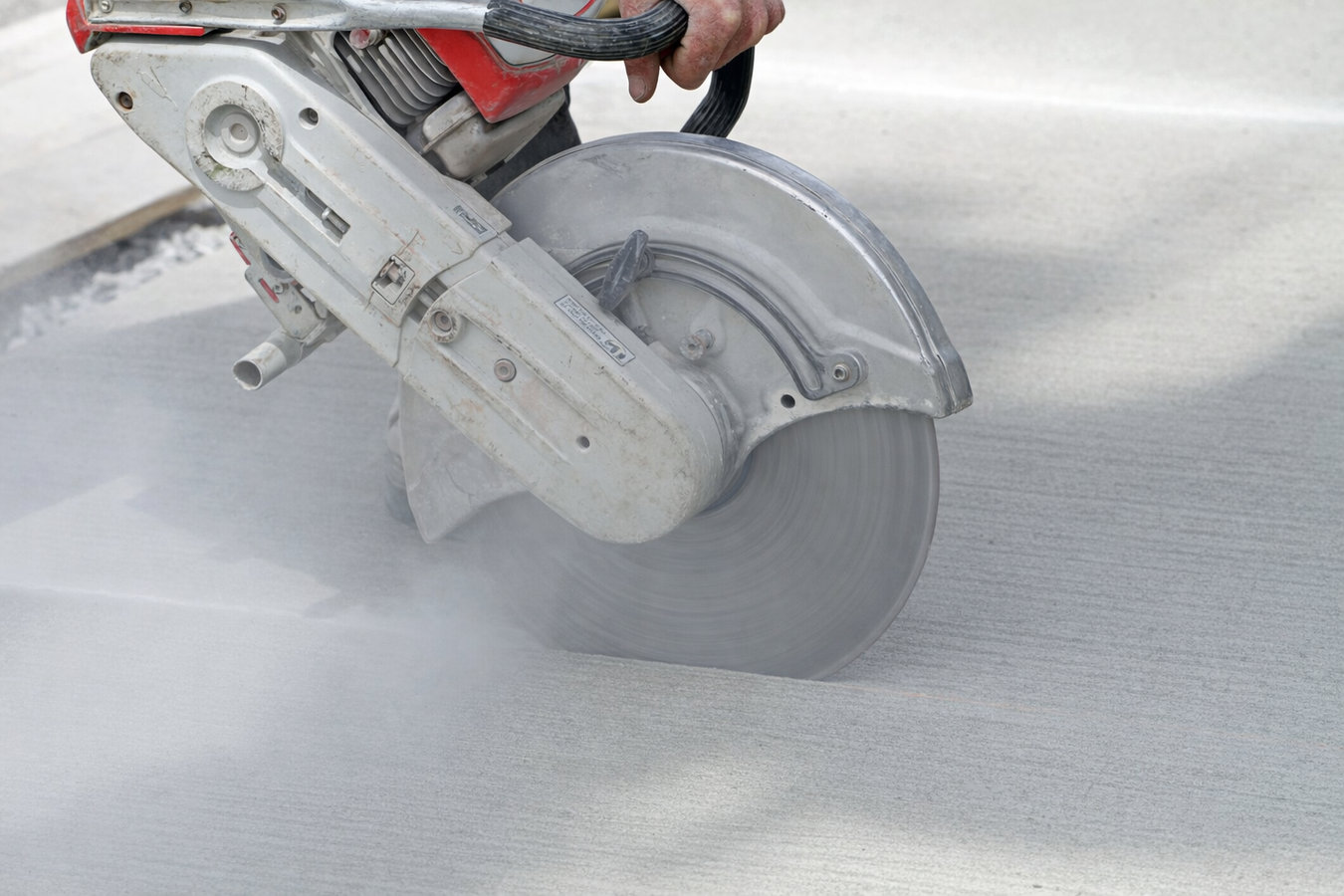
Diamond-blade cuts through driveways, basement floors, and foundation walls. Utilities marked before every job. Dust controlled on interior work. No guesswork, no corners cut.
Concrete cutting in Concord, NH uses diamond-tipped blades and core drills to make clean, straight cuts through hardened concrete in driveways, basement floors, and foundation walls, with most residential jobs completed in one to four hours depending on the length and thickness of the cut - far cleaner and more controlled than jackhammer demolition, which leaves rough, unpredictable edges.
Homeowners in Concord typically need concrete cutting for one of a few reasons: a driveway section that freeze-thaw cycles have shifted out of level, a basement floor that needs to be opened for a new drain or radon mitigation pipe, or a foundation wall where an egress window or doorway needs to be cut. In any of these cases, the quality of the cut determines how clean and durable the finished repair looks. When a section needs to come out entirely and fresh concrete poured back in, the cutting step is what makes that possible - and pairing it with our concrete driveway building service means both the removal and the replacement are handled as one job.
New Hampshire requires contractors to contact the state utility marking service before any ground-disturbing work - including concrete cutting. We handle that call before every job without exception. In Concord's older neighborhoods, undocumented plumbing and electrical runs are common, and that step is what keeps a routine project from becoming a much bigger problem.
If one section of your concrete driveway or front walk sits noticeably higher or lower than the one next to it, the slab has shifted - often because of Concord's freeze-thaw cycles pushing the ground underneath. A raised edge is a tripping hazard and will only get worse each winter. Cutting out and replacing the affected section is usually the cleanest fix.
If a plumber, HVAC technician, or radon contractor tells you they need to access something beneath your basement floor or run a new line through a foundation wall, concrete cutting is how that access gets made. The cutting step is what makes the rest of the project possible, and a skilled crew can do it cleanly with minimal disruption.
New Hampshire has elevated radon levels statewide, and Concord homeowners who test their basements frequently find readings above the action level. Installing a radon mitigation system almost always requires drilling through the basement floor - a form of concrete cutting. If your radon test came back high, ask your mitigation contractor specifically what the floor work involves.
Not all cracks mean you need cutting - hairline surface cracks are common and often harmless. But if you see cracks that run the full width of a section, are wider than about a quarter inch, or have one side sitting higher than the other, the slab has shifted enough that patching alone will not hold. A concrete contractor can assess whether cutting out the damaged section is the right call.
We handle flat slab sawing, core drilling, and wall sawing for residential and small commercial projects across Concord. Every job starts with a written quote that spells out what is included - cutting, debris removal, and patching if needed - so you know exactly what you are paying for before anything starts. For projects where the cut-out section needs to be replaced with fresh concrete, we coordinate directly with our concrete driveway building team so the removal and pour are managed as one job. For commercial sites where saw-cut control joints are part of a new pour, concrete parking lot building work incorporates precision cutting into the project from the start.
Interior cutting - basement floors, crawl space slabs, and foundation wall work - requires specific dust control measures. We use water-cooled blades and lay down protective coverings before we start. After the cut is done, debris hauling is included in the quote. We walk the finished work area with you before we leave and give you a clear timeline for when patched concrete is safe to walk and drive on.
For driveway sections, basement floors, and patio slabs that need a straight, precise cut through horizontal concrete - the most common residential concrete cutting job.
For round openings - radon mitigation pipes, plumbing penetrations, utility lines, and gas line installations through slab or foundation walls.
For cutting openings through vertical foundation walls - new doorways, egress windows, and utility penetrations in older Concord homes.
For removing a damaged slab section cleanly so fresh concrete can be poured - including debris hauling so nothing is left behind on your property.
Two local conditions drive a lot of the concrete cutting work we do in Concord. The first is the climate: freeze-thaw cycles push driveway and walkway sections out of level every winter, and heaved edges that become tripping hazards are one of the most common reasons homeowners call for a cut-and-replace. New Hampshire also has some of the highest radon levels in the country, and Concord sits in a region where basement tests frequently come back elevated. Installing a radon mitigation system requires drilling through the basement floor - one of the most common interior cutting jobs we do, and one that the NH Department of Environmental Services documents as a priority for homes in this region. Homeowners in Manchester and Nashua deal with the same conditions, and we handle concrete cutting work across both communities.
The second factor is Concord's housing stock. A large share of homes in the South End and East Concord were built between the 1940s and 1970s, often with thinner, less reinforced slabs than modern construction uses. Cutting into older concrete requires a slower approach and a sharper eye - brittle slabs can develop fractures that spread beyond the cut line if a contractor moves too fast or uses the wrong blade. Knowing the age and condition of your slab before the saw starts is not optional. It is part of the job.
When you reach out, we ask a few basic questions: where is the concrete, how large is the area, and do you know if there are pipes or wires underneath? You do not need all the answers. A good contractor helps you figure out what they need to know before they come out. We reply within one business day.
We come out to look at the slab thickness, check for visible cracks or damage nearby, and assess how easy it is to get equipment to the work area. You receive a written quote spelling out what is included - cutting, debris removal, and any patching - so there are no surprises on the invoice.
Before any blade touches your concrete, we contact New Hampshire's 811 utility marking service - a required step under state law that gets underground pipes, wires, and gas lines flagged. This typically takes a few business days. We handle it, but we confirm it is done before the crew starts. This step is not optional, and we do not skip it.
On the day of work, the crew cuts using water suppression to control dust, removes the concrete pieces, and cleans the work area before they leave. If patching is needed after a trade finishes their work, we schedule the pour and give you a clear timeline for when the area is safe to walk and drive on again.
No obligation. We visit the site, assess the job, and give you a written estimate before any work starts.
(603) 802-8228New Hampshire law requires it, and we treat it as non-negotiable. Before any blade touches your concrete, underground pipes, wires, and gas lines are marked by the state's utility locating service. In older Concord neighborhoods where plumbing and electrical runs were not always documented, this step is what keeps a routine cut from becoming an expensive emergency. Dig Safe - NH 811.
Cutting concrete indoors creates fine silica dust that spreads fast in an enclosed space. We use water-cooled blades on interior work - standard practice recommended by OSHA for silica dust control. We also lay down protective coverings before we start and clean up completely before we leave. You signed up for a cut, not a cleaning project.
Structural concrete cutting in Concord - foundation wall openings, basement floor work tied to plumbing - often requires a building permit through the City of Concord's Building Division. We tell you honestly which category your job falls into, handle the application if needed, and make sure the work passes inspection. You are protected when you sell the home or file an insurance claim. Concord Building Division.
Homes in Concord's South End and East Concord neighborhoods often have slabs poured between the 1940s and 1970s - thinner, less reinforced, and more brittle than modern concrete. We assess slab condition before starting and adjust our approach for older material. Rushing a cut on a brittle slab causes cracking that spreads beyond the cut line - and that is a problem we prevent, not create.
Concrete cutting looks simple from the outside - a saw, a straight line, done. The difference between good work and poor work shows up months later, in whether the edges hold and the patch stays tight through a Concord winter. That is where preparation and technique matter, and it is where we focus.
New driveway poured after old sections are cut out and removed - full replacement done right from sub-base to finish.
Learn MoreCommercial-grade concrete poured for parking areas, including saw-cut control joints to manage cracking long-term.
Learn MoreWarm-weather slots book fast - call now or request a free written quote online and we will get back to you within one business day.